By 90MinFootball | May 25, 2026
When Roman Abramovich was forced to sell Chelsea Football Club in the spring of 2022, the footballing world held its breath. What kind of owner would replace one of the most consequential figures in Premier League history? The answer, it turned out, was one who would spend more money than anyone ever had — and still somehow make it look like chaos.
The End of an Era — And the Beginning of Something Stranger
On May 30, 2022, a 19-year chapter of Chelsea history closed.
Roman Abramovich, the Russian billionaire who had transformed Chelsea from mid-table obscurity into a five-time Premier League champion and two-time Champions League winner, was gone. The UK government had sanctioned him following Russia’s invasion of Ukraine, and the club he had bankrolled through some of the greatest moments in its history was sold for £4.25 billion — the most expensive sports team sale in history at the time.
Into Stamford Bridge walked Todd Boehly.
An American businessman with a portfolio that included the Los Angeles Dodgers baseball team, a stake in the LA Lakers basketball franchise, and the LA Sparks women’s basketball team, Boehly arrived with his consortium — Clearlake Capital, Mark Walter and Hansjörg Wyss — and a level of ambition that would define everything that followed.
The fans dared to dream. The football world watched with curiosity. Nobody quite predicted what was coming.
The Summer and Winter of Todd — A Transfer Spree Like No Other
If there was any doubt about what the Boehly era would look like, the first transfer window erased it completely.
In the summer of 2022 alone, Chelsea spent over £250 million, bringing in Raheem Sterling from Manchester City, Marc Cucurella from Brighton, Kalidou Koulibaly from Napoli, Wesley Fofana from Leicester, and Aubameyang from Barcelona, among others. It was extraordinary spending by any measure.
But it was only the beginning.
Over the course of the 2022-23 season, Chelsea spent an eye-watering €630.3 million — the most any football club had ever spent in a single season in the history of the sport. Then came January 2023, and the most stunning single window in football history. Chelsea broke the British transfer record by signing Argentine World Cup winner Enzo Fernández from Benfica for £107 million. By the end of that window, Chelsea had spent more in a single transfer window than the entire combined net spend of every club in La Liga, Serie A, Bundesliga, and Ligue 1. Combined. All of them.
The number that will define this era most starkly: by August 2025, Chelsea had made over 50 signings at a total cost of more than £1.4 billion under Boehly’s ownership.
The strategy was unconventional but deliberate — exploit football’s amortisation rules by signing players on long, seven-year contracts, spreading the fee across more years and technically staying within financial fair play limits. Chelsea were playing the system, and playing it aggressively.
The Managerial Merry-Go-Round
All that spending required a manager capable of turning it into trophies. Chelsea would go through several attempts to find one.
Thomas Tuchel — the man who had won Chelsea the Champions League in 2021 — lasted just six games into the Boehly era before being sacked in September 2022, shockingly, following a 1-0 defeat to Dinamo Zagreb in the Champions League. The manner of the dismissal set a tone.
Graham Potter arrived from Brighton with a glowing reputation and a distinctive, possession-based philosophy. He lasted seven months, sacked in April 2023 with Chelsea sitting mid-table despite the billions spent. Club legend Frank Lampard stepped in as interim manager to finish the season with dignity, if not results.
Then came Mauricio Pochettino, the experienced Argentine who had previously built Tottenham Hotspur into a Champions League finalist. He steadied the ship, brought some sense of structure to the dressing room, and guided Chelsea back toward the top half of the table. But after one season of steady-if-unspectacular progress, he and Chelsea parted ways mutually in May 2024.
Four managers in two years. Billions spent. A squad overflowing with talent and yet somehow lacking cohesion, identity, and belief.
Chelsea needed someone different.
The Maresca Revolution — From Chaos to Champions
Enzo Maresca had done something remarkable at Leicester City in the Championship — taken a club with Premier League quality and drilled them into an unstoppable, high-pressing machine that stormed back into the top flight. Chelsea believed he could do the same with their expensively assembled but underperforming squad.
In his first season, Maresca proved his doubters wrong. He established clear tactical principles, gave the young players in the squad genuine belief, and dragged Chelsea back into the Champions League by finishing fourth in the Premier League. It was a genuine achievement given the dysfunction that had preceded him.
But the truly historic moment came in July 2025.
At the inaugural expanded FIFA Club World Cup held in the United States, Chelsea — fielding one of the youngest squads in the tournament — went all the way to the final. Waiting for them were Paris Saint-Germain, the reigning UEFA Champions League winners and arguably the most expensively assembled club squad on the planet.
Chelsea destroyed them.
3-0. First half. Game over in ten minutes.
Maresca deployed Reece James in an innovative defensive pivot alongside Moises Caicedo, pushing Enzo Fernández higher up the pitch to press aggressively from the front. PSG never adjusted. Cole Palmer — Chelsea’s mercurial 23-year-old talent — scored twice and set up Joao Pedro for the third, earning the Golden Ball as the tournament’s best player.
It was Chelsea’s most significant trophy in years. Maresca had made them world champions.
“We won the game in the first 10 minutes,” Maresca said afterwards. “In the first 10 minutes we set the tempo, we set the way we wanted to play.”
The Fall — From World Champions to the Sack in Six Months
What happened next was one of the most extraordinary collapses in recent Premier League history.
Chelsea began the 2025-26 campaign carrying the momentum of Club World Cup winners. But results deteriorated rapidly through the autumn. By December 2025, Chelsea had won just one of their last seven Premier League games, sat fifth in the table, and were 15 points adrift of leaders Arsenal.
Behind the scenes, the situation was deteriorating even faster than the results suggested. A long-running dispute had developed between Maresca and Chelsea’s medical department. Sources close to the situation described Maresca repeatedly disregarding recommendations made by the club’s medical staff — a flashpoint that had been simmering since the previous season.
More broadly, Maresca — emboldened by his success — had grown frustrated with the level of external input into his coaching decisions. He believed, not unreasonably given what he had delivered, that he had earned the right to greater autonomy. The club’s hierarchy disagreed.
On New Year’s Day 2026, Chelsea released a terse official statement: Enzo Maresca had left the club.
Six months after making Chelsea world champions, he was gone.
A legal dispute subsequently emerged over the exact circumstances of his departure — whether it constituted a sacking or a resignation — reflecting just how acrimonious the split had become.
Liam Rosenior stepped in as interim manager while the search for a permanent replacement began.
Enter Xabi Alonso — The New Hope
On May 17, 2026, Chelsea announced the appointment of Xabi Alonso as their new manager on a four-year deal, with the Spaniard set to begin officially on July 1.
Alonso’s managerial credentials are extraordinary. At Bayer Leverkusen, he achieved what had been considered impossible — guiding the club to their first-ever Bundesliga title, doing so in historic fashion without losing a single league match across the entire season. That achievement alone placed him among the elite coaches in European football.
He subsequently took charge of Real Madrid following Carlo Ancelotti’s departure, but the spell at the Bernabéu proved shorter than anyone anticipated. Fired in January 2026 after a difficult half-season, Alonso had been available — and Chelsea moved decisively to secure him.
He becomes the fifth permanent managerial appointment of the Boehly era, following Tuchel, Potter, Pochettino and Maresca.
The expectation is immense. Chelsea’s squad — despite the chaos of recent years — contains genuine world-class talent: Cole Palmer, Enzo Fernández, Reece James, Moises Caicedo. If anyone can harness it, those who witnessed what Alonso did at Leverkusen believe he can.
The Verdict on the Boehly Era — So Far
Four years on from that £4.25 billion takeover, how do you assess the Todd Boehly era?
The spending has been unprecedented — and frequently baffling. Fifty-plus signings. Managers cycled in and out. A squad that looked, at times, like a collection of talented strangers rather than a football team.
And yet.
Chelsea are in the Champions League. They are FIFA Club World Cup winners. Their academy — through Cole Palmer above all others — has produced one of the most exciting young players in European football. And they have just appointed one of the most coveted managers on the planet.
The chaos has been real. But so has the ambition.
Whether Xabi Alonso can finally bring the sustained, coherent identity that has eluded Chelsea throughout the Boehly years is the defining question of the next chapter. The pieces are there. The money is there. The manager — for the first time in this era — genuinely appears to be there too.
For Chelsea fans who have lived through four years of bewilderment, hope feels cautious but real.
📸 Image credit: @ChelseaFC on X (Twitter) / Chelsea FC Official — Official Xabi Alonso appointment announcement image
Sources: ESPN, Chelsea FC Official, Al Jazeera, The Pride of London, beIN Sports, Total Football Analysis
Related Posts
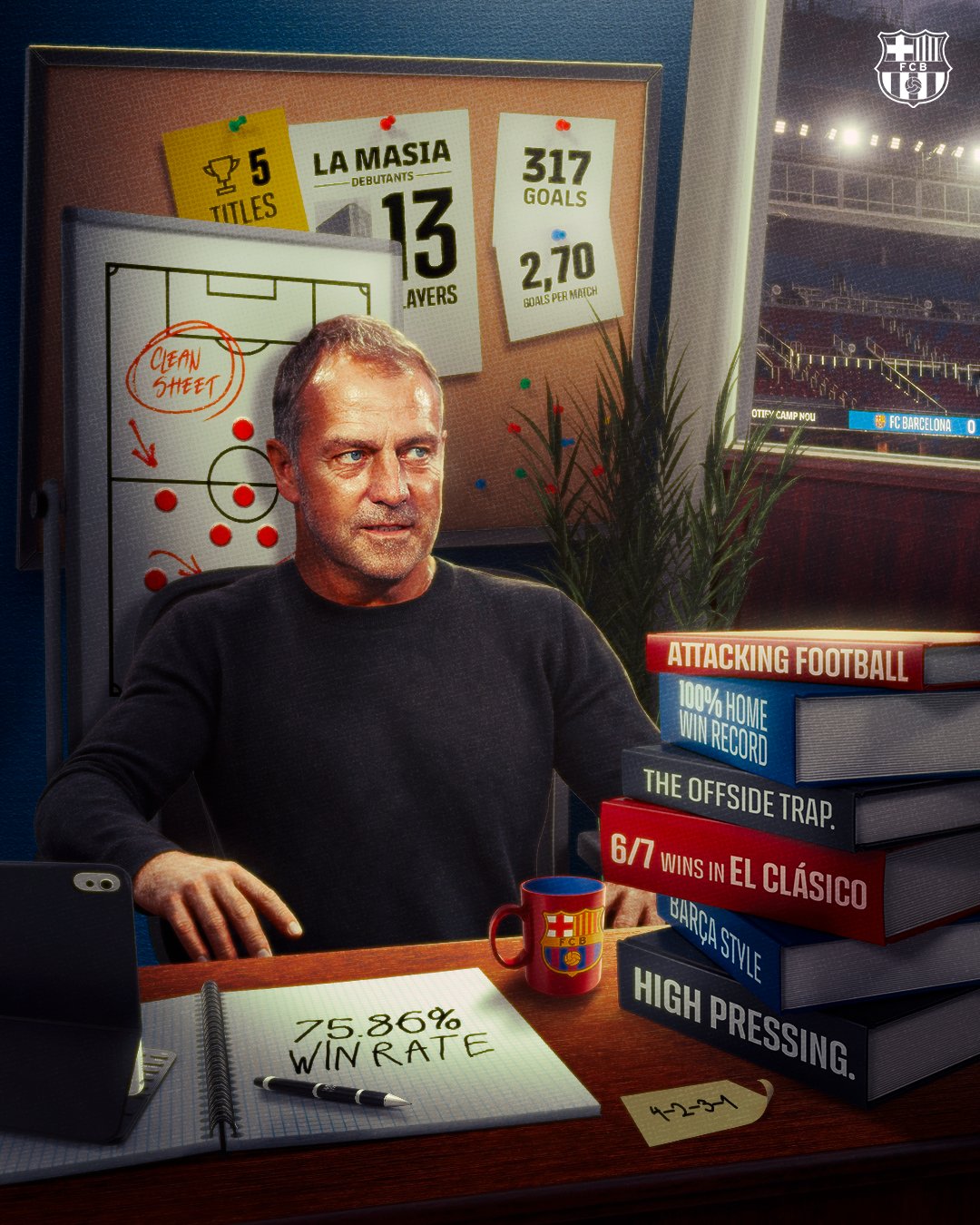
The Miracle Architect: How Hansi Flick Rebuilt Barcelona Without Money, Without His Targets, and Without Limits
By 90MinFootball | May 24, 2026 When Xavi Hernandez left…